
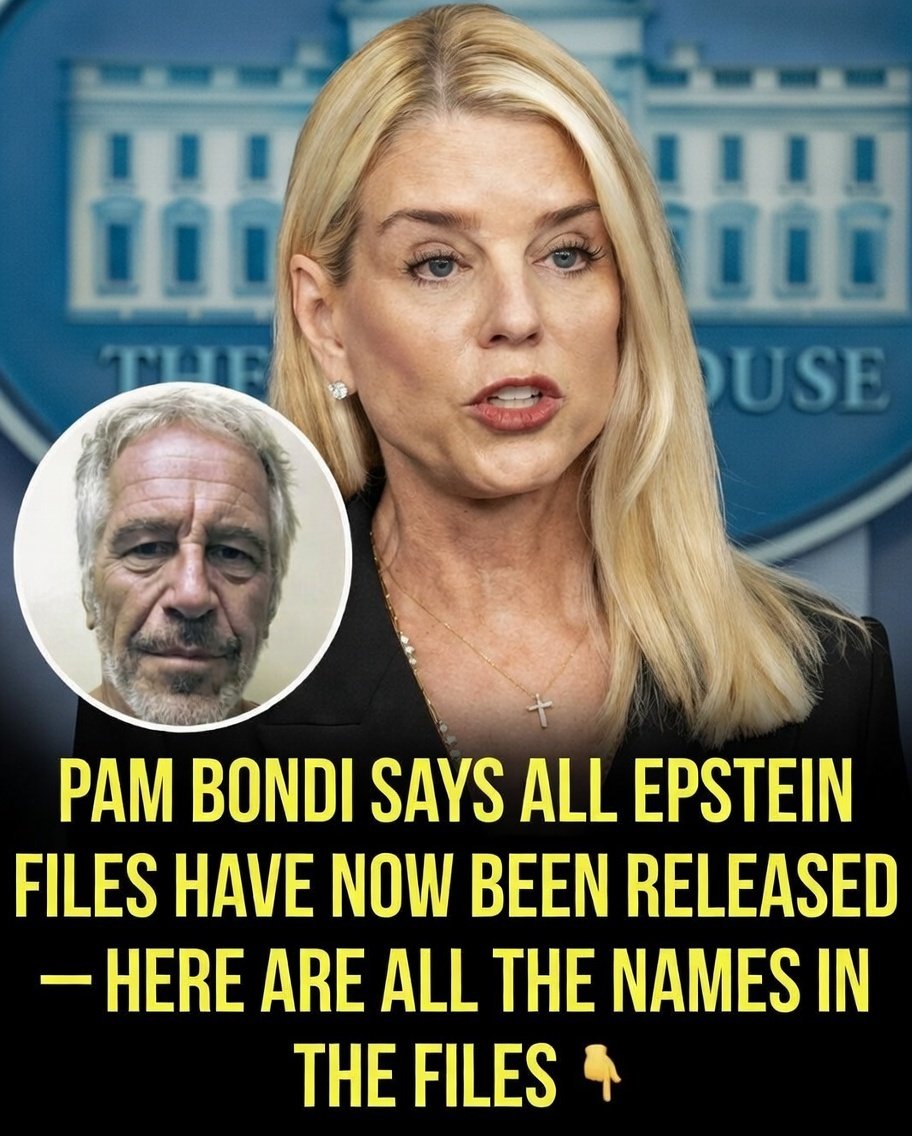

A major update has dropped in the long-running investigation tied to convicted financier Jeffrey Epstein. On Saturday, U.S. Attorney General Pam Bondi confirmed that the federal government has completed the public release of documents connected to the Epstein case, marking what officials describe as the final phase of disclosure.
The announcement follows months of staggered releases under a transparency law designed to make Epstein-related records available to the public. According to officials, millions of pages—including emails, photographs, and investigative materials—were reviewed by federal staff before being published in multiple batches. The final release reportedly contains references to more than 300 well-known individuals across politics, business, royalty, and entertainment.
Bondi stressed that appearing in the files does not imply wrongdoing. Names show up in a wide range of contexts, from casual mentions in emails to indirect references in documents or media clippings. “Being named does not mean a person was involved in any criminal activity,” she said, adding that records were not withheld simply to protect reputations or avoid political discomfort.
The list of public figures referenced is vast, including former President Donald Trump, Microsoft co-founder Bill Gates, former President Barack Obama, and former Secretary of State Hillary Clinton. Celebrities such as Bruce Springsteen and Kim Kardashian were also named, along with historical figures and even people who passed away years before Epstein’s crimes were uncovered—highlighting how broad and often misleading raw lists can be without proper context.

Continue reading on the next page to see who is on the list…
Not everyone is satisfied with how the information was presented. Lawmakers including Thomas Massie and Ro Khanna argued that simply publishing names without detailed context risks confusing the public. They are pushing for the release of internal government memos explaining why certain investigations were pursued—or dropped—over the years. Khanna also warned that mixing unrelated names with those of convicted offenders can “muddy the waters” and distract from accountability.
Victims’ advocates raised separate concerns about privacy. Attorneys representing survivors said some files briefly exposed identifying details, including private images and contact information. Officials acknowledged the issue, calling it a technical or human error, and said the affected files were quickly removed.
While the release is being framed as a major transparency milestone, many believe it’s only part of the story. Questions remain about who knew what, when decisions were made, and why certain paths were never fully investigated. For families, survivors, and the public, the demand for clarity—and accountability—hasn’t faded.
What’s your take on the release of these files? Should more internal records be made public for context, or is this level of transparency enough? Share your thoughts below and join the conversation.